How Long Do PVC Fascia Boards Last? (Ireland)
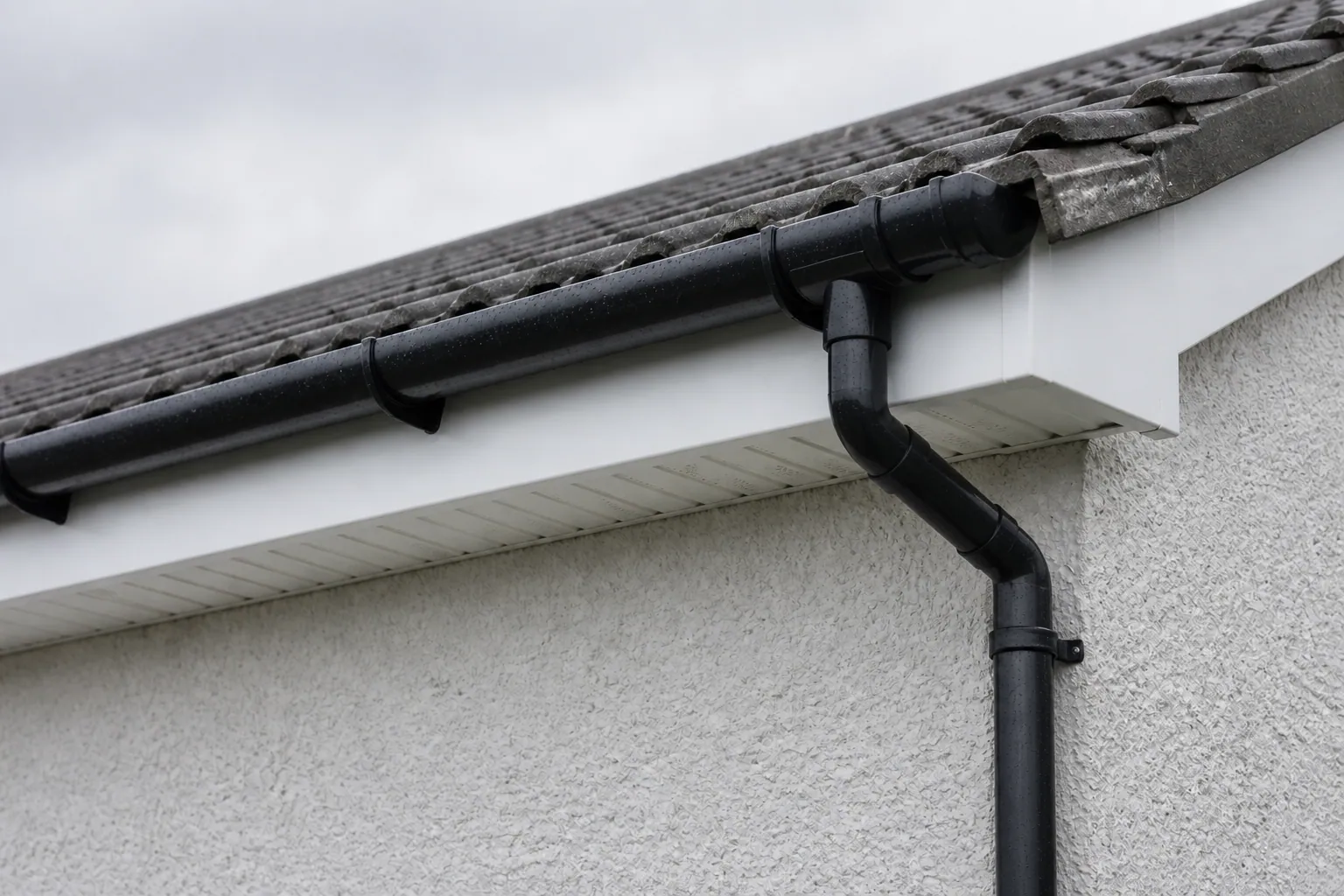
A working estimate for properly installed uPVC fascia is around 20 to 30 years, not a guaranteed service life. This draft estimate still needs technical verification: two identical boards on the same street can age very differently depending on aspect, installation and what is happening behind them.
What shortens the lifespan
- South-facing elevation. Years of direct sun can discolour and embrittle cheaper boards. Better-grade uPVC with UV-stable colouring resists this; the effect varies by product and exposure.
- Poor installation. Boards nailed too tightly cannot expand and contract, and they warp or crack at fixings. Correct expansion gaps and the right pins matter.
- What is behind the board. If uPVC was capped over damp or soft timber, the hidden rot keeps working until fixings lose their grip and the new boards sag. This is one reason "new" fascia can fail early, and why the capping-over question in our fascia and soffit guide matters.
- Storm damage and overflowing gutters. Impact loosens boards; chronic overflow keeps them wet. Keeping gutters clear (see cleaning frequency) protects the whole roofline.
Signs a board is nearing the end
Visible from the ground: sagging or waviness along the run, boards pulling away at joints or corners, cracks at fixing points, heavy discolouration, and gutters tilting because the fascia behind them is moving. Any of these justifies a professional inspection rather than a ladder.
Repair or replace?
Localised damage (one cracked section, a loose corner) is often repairable. Widespread sagging or multiple cracked boards usually means the underlying timber or fixing has failed across the run, and a contractor should assess whether replacement is needed. Indicative costs are in the fascia and soffit cost guide.
Draft evidence note: Numerical ranges above were supplied as FuturePublishing internal editorial estimates. They have not been independently verified; named technical review is still required.