
Felt, EPDM or Fibreglass? Flat Roofs in Ireland
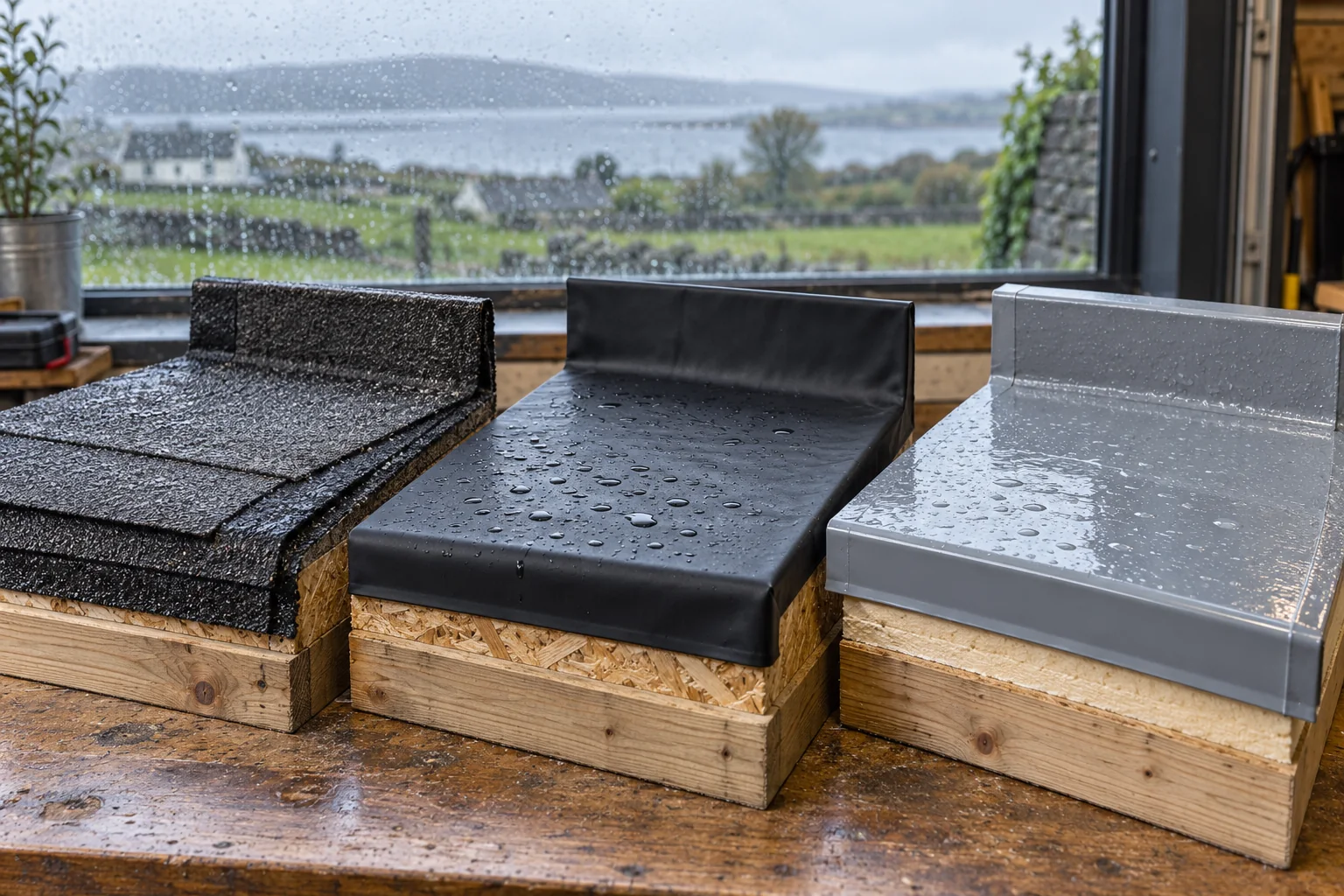
Flat roofs in Ireland live a harder life than flat roofs almost anywhere drier. They do not truly shed water the way a pitched roof does; they hold it in shallow pools for hours after every shower, and in an Irish winter that is most of the time. So when the covering on your extension, garage or dormer reaches the end of its life, the material question matters more here than the brochures suggest.
The three coverings you will be quoted for are felt, EPDM and fibreglass. Each is a genuine option; none is right for every roof.
Traditional felt (torch-on or cold-applied)
The default for generations: bituminous felt laid in overlapping layers. Modern torch-on systems are far better than the pour-and-roll roofs of the 1970s, and felt remains common on Irish extensions.
Strengths: the lowest upfront cost of the three; every roofer knows it; easy to patch and repair locally. Weaknesses: seams are the failure point, and an Irish flat roof tests seams constantly; shorter service life than the alternatives; torch application is skilled, flame-based work.
EPDM rubber membrane
A single sheet of synthetic rubber, often cut to cover a small roof in one piece with no seams at all.
Strengths: on a simple rectangular roof there may be no seams to fail; flexible in cold weather; tolerates standing water well, which is the Irish flat roof's daily reality. Weaknesses: the sheet is only as good as its edges, upstands and any joins; punctures more easily than fibreglass if people walk on it; dark surface, which matters only for looks on most Irish roofs.
Fibreglass (GRP)
Glass-reinforced plastic: resin and glass mat built up in place into a single seamless, rigid shell.
Strengths: seamless when done properly; rigid and walkable; tidy edge trims; long service life when the installer knows the system. Weaknesses: rigid means it dislikes movement - on a deck that flexes or a building that settles, poor detailing cracks; installation is weather-sensitive (resin and Irish rain are enemies during fitting); repairs must be done in the same system.
The comparison that actually matters
Forget the material marketing and ask instead:
- What is the deck? A sound, rigid deck suits any of the three; a springy or doubtful deck argues against GRP and possibly for stripping back first.
- How complex is the shape? Lots of corners, upstands and rooflights favour materials the installer is most practised with, not the theoretically best one.
- Who is fitting it? This is the honest answer. A well-fitted felt roof outlasts a badly-fitted GRP roof every time. Ask each contractor which system they fit most often, and why it suits your roof. Our guide to choosing a roofer has the evidence questions to back that up.
Repair or replace?
Before accepting a full replacement quote, ask whether repair is genuinely exhausted. Localised felt splits, a failed upstand or a cracked GRP edge trim are all repairable, and an honest roofer will say so. Replacement earns its keep when leaks are widespread, the deck is soft, or the covering has reached the end of its serviceable life across the whole area. Our guide to flat vs pitched roofs covers the wider picture, and the shed-scale version of this decision is in our shed roof guide.
When you are ready for numbers: Request quotes from roofers in your county - and ask each one which covering they are pricing, because "flat roof recovered" without a named system is not a quote you can compare.
Related questions
Can a new covering go over the old felt?
Sometimes, where the deck is sound and dry underneath - it is a legitimate way to keep costs down. But a roofer cannot know what the deck is like without checking, so be wary of quotes that promise an overlay sight unseen.
Is fibreglass slippery?
A standard GRP topcoat is slippery when wet, which is one more reason flat roofs are for professionals with the right access, not for weekend inspections. Anti-slip finishes exist for balconies and walkable areas.
How long will each last?
We do not publish lifespan figures without sources we can stand over. What we can say: all three systems are proven in Ireland, and the spread between a good and bad installation is wider than the spread between the materials themselves.
Sources checked
General material descriptions only. Comparative performance wording remains held for named technical review.