
Moss on Your Roof? When It Matters in Ireland
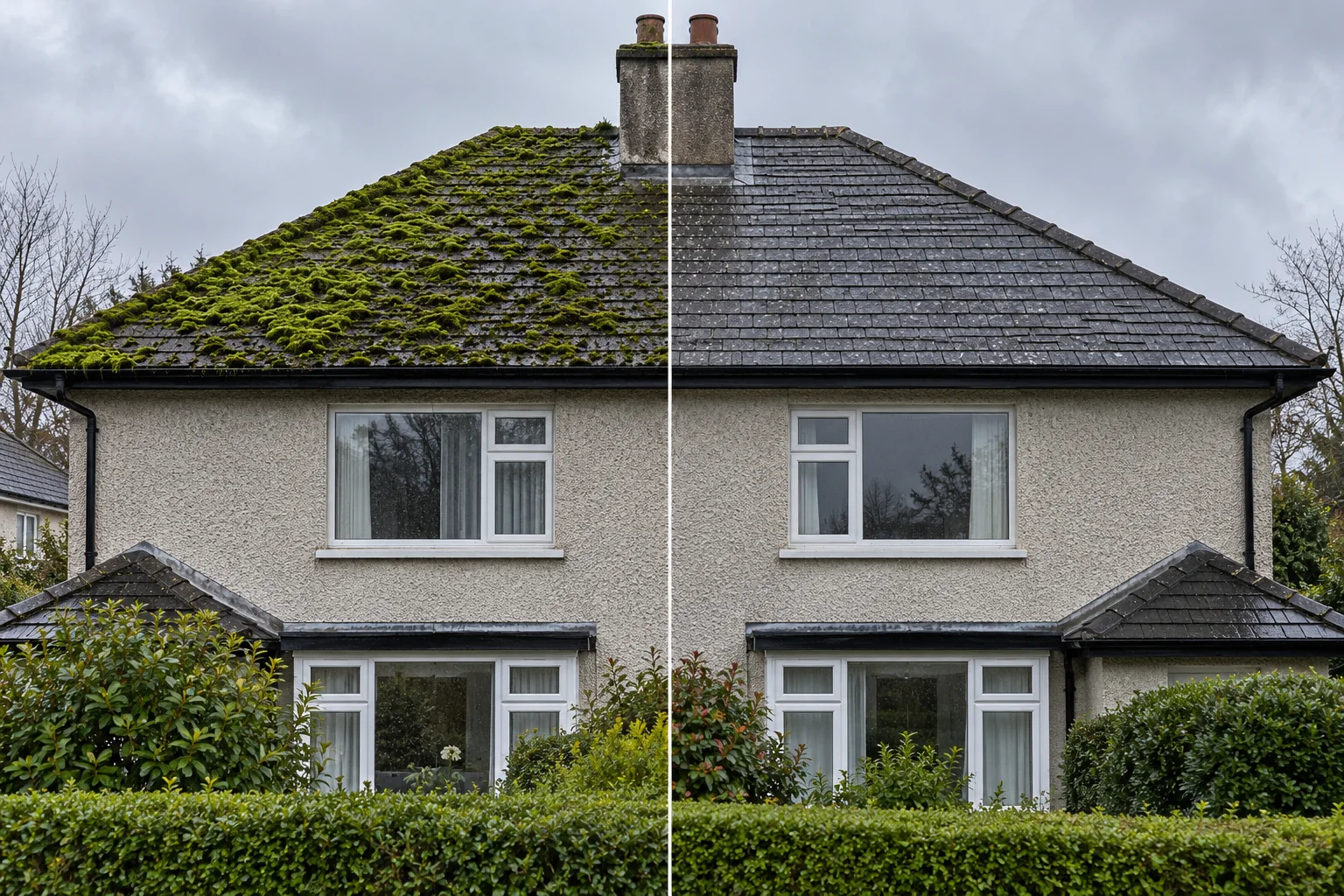
Ireland is a wonderful country for moss. Mild, wet, rarely frozen hard for long: the Atlantic climate that keeps the fields green keeps roofs green too, especially north-facing slopes and anything shaded by trees. So the first honest answer is that some moss on an Irish roof is normal, and on older slate it can sit there for decades doing little harm.
The second honest answer is that "mostly harmless" has limits, and knowing where they are saves you money.
What moss actually does to a roof
Moss itself does not eat slate or tile. The trouble comes from what it holds and what it drops:
- It holds water. A thick moss cushion stays wet long after the rain stops, keeping the slates beneath it damp. On porous tiles that can shorten their life; on good slate the effect is slower but real over years.
- It lifts edges. Moss growing under the bottom edge of a slate or tile can wedge it slightly upward, giving wind-driven rain a way in and giving the next storm something to grab.
- It fills gutters. This is the big one in practice. Moss breaks off in clumps, washes down, and blocks gutters and downpipes. A roof covered in moss and a gutter overflow problem usually arrive together. Our gutter damage guide covers what overflowing gutters then do to fascia, soffits and walls.
When it is worth acting
Reasonable triggers to get advice:
- Moss thick enough that you can no longer see the slate surface from the ground
- Moss clumps regularly appearing in gutters, at downpipe outlets, or on the ground below
- Damp patches appearing indoors on the top floor alongside heavy growth
- You are planning solar panels or other roof work, and the installer wants a clean, sound surface first
A light dusting of green on a dry, sound roof with clear gutters can usually be left alone and monitored.
What professional removal involves
Roofers in Ireland typically use one of three approaches, sometimes in combination:
- Manual removal: scraping and brushing the bulk growth off, usually with a profiled scraper matched to the tile shape.
- Soft washing: applying a treatment that kills remaining growth and spores so regrowth takes years rather than months.
- Biocide treatments: residual treatments that keep spores from re-establishing.
Two things matter more than the method. First, the run-off: whatever goes on your roof comes down your downpipes, so a reputable contractor controls where that water goes. Second, pressure washing is where damage happens. High-pressure water can damage some coverings, dislodge surface finishes and drive water beneath laps when the method is unsuitable or poorly controlled. If a contractor's plan is a pressure washer and nothing else, ask more questions.
What it costs
Moss removal pricing depends on roof size, access, growth thickness and whether treatment follows the clean, and we do not quote figures we cannot stand over. What we can say: a straightforward scrape-and-treat on a typical semi is a routine day's work for a two-person crew, while scaffolding or fragile roofs change the picture entirely. Get two or three written quotes that state exactly what is included - you can Request quotes from roofers in your county.
Keeping it away longer
- Cut back overhanging branches: shade and drips are moss's best friends
- Keep gutters clear so organic matter does not build up at the eaves
- After any removal, ask how long the treatment is expected to suppress regrowth, and get that in the quote
- Check from the ground each autumn as part of the routine in our roofline inspection guide
Related questions
Is the black streaking on my roof moss too?
Usually not. Dark streaks are typically an algae that thrives in the same damp conditions. It is largely cosmetic, though heavy growth alongside moss is a sign the roof stays wetter than it should.
Can I scrape it off myself from a ladder?
No - and this is one of those jobs where the DIY risk outweighs the saving. Roof work at height is professional territory. Everything you need to decide can be seen from the ground.
Will moss damage a flat roof?
Yes, and faster than on a pitched roof, because standing growth holds moisture against felt or membrane that is designed to shed water, not store it. Flat roofs with moss deserve earlier attention.
Sources checked
General roof-maintenance practice only. Treatment, pressure and run-off wording remains held for named technical review.