
How to Spot Gutter Damage From Ground Level
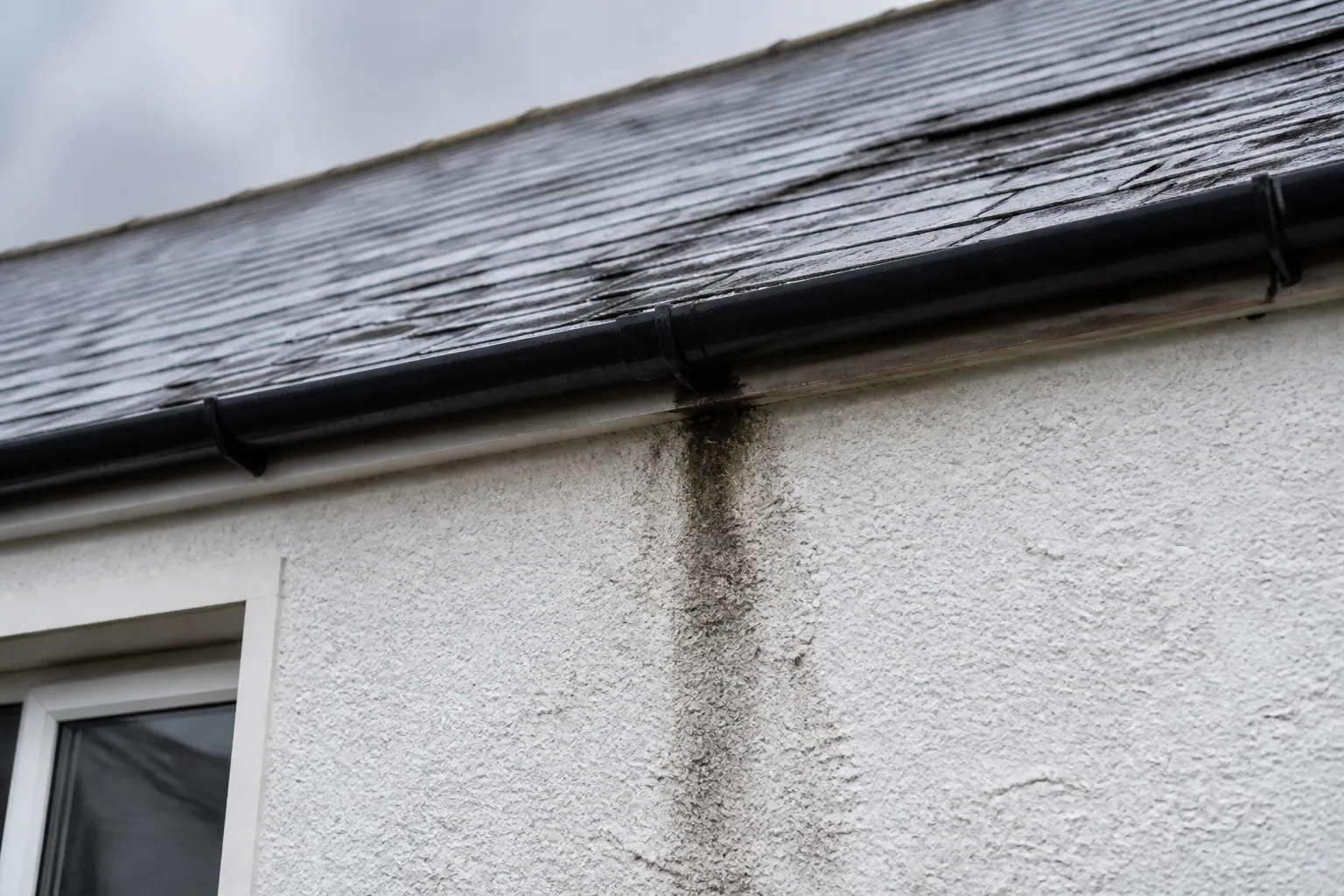
A safe homeowner checklist for recognising overflow, sagging, staining and other gutter warning signs without climbing onto the roof.
Stay on the ground. Do not climb onto the roof or lean out of an upper window to inspect guttering. The Health and Safety Authority treats ladder and roof work as work at height because a fall can cause serious injury. If a useful view is not available from ground level or from safely inside the home, arrange a professional inspection.
Gutter problems often become visible during rain before they cause obvious damage indoors. You do not need to diagnose the fault yourself. A short, safe observation from ground level can help you explain the symptom clearly and obtain a more useful quotation.
What a working gutter should do
Rainwater should leave the roof, enter the gutter and move towards a downpipe without spilling over the front or running behind the gutter. At ground level, water should leave the downpipe through the intended drain or outlet rather than collecting beside the wall.
Warning signs you can see safely
Water spilling over during rain
Overflow may indicate a blockage, a poor fall, a displaced joint, insufficient capacity or a restricted downpipe. Note where the water appears and whether it happens along the full run or at one point.
A dip or uneven line
Stand well back and look along the gutter. A visible low point can hold water and debris. It may be caused by loose brackets, movement in the gutter run or deterioration in the fascia behind the fixings.
Cracks or splits in the channel
Look for a visible split along the bottom or back edge of the gutter, or a fine line that drips steadily during rain. uPVC can become brittle with age, particularly on runs that face strong sun, and a small crack will usually grow as water weight and frost work on it. A crack cannot be judged properly from below, so treat any suspected split as a reason to arrange a closer professional look rather than a reason to climb.
Mould or mildew on the wall below the roofline
Dark patches, green film or a musty smell on an outside wall beneath the gutter often mean water has been escaping and running down the wall for some time. Left alone, that moisture can reach internal plaster and insulation. Mould low on a wall can have other causes, so note the pattern: staining that tracks the gutter line points back to the roofline.
Staining below a joint or corner
Repeated dark marks, algae or peeling finishes below the roofline suggest that water is following the same unwanted path. Photographs taken from the ground after rain can help a contractor locate the area.
Plants, moss or debris above the gutter edge
Visible growth means material has accumulated in the channel. Wet debris adds weight and can obstruct the route to the downpipe. Do not try to reach it from an upstairs window.
Loose or displaced parts
A separated joint, hanging end cap, twisted downpipe or fragment found on the ground should be checked promptly. Keep people away from anything that looks unstable, particularly after strong wind.
Water collecting beside the wall
Check the downpipe outlet from a safe distance. Water should not discharge against the wall or form a persistent pool beside the building. The problem may be at the outlet, underground connection or downpipe rather than the gutter itself.
Equipment for ground-level observation
Phone zoom or binoculars can help you record a visible symptom, but cannot establish the cause or replace a professional inspection. A torch is for a safe, dry position; do not enter a wet or damaged roof space. Drain tools are relevant only to accessible ground-level outlets, used as instructed without reaching up or opening unsafe covers.
Make a useful record
- Write down the side of the house and the nearest window, corner or downpipe.
- Record whether the symptom appears in light rain or only during a heavy shower.
- Take wide and close photographs using phone zoom while remaining on the ground.
- Note any damp mark indoors, but do not assume the gutter is the only possible cause.
- After severe weather, wait until conditions are safe before walking around the property.
What you can safely do yourself, and what a professional does
The safe boundary is simple: anything that needs a ladder, roof access or reaching from a window is professional work. The Health and Safety Authority is clear that falls from height are a leading cause of serious injury, and a gutter repair is never worth that risk.
A homeowner can still do useful work from the ground:
- Observe and record the symptoms, as described above.
- Clear leaves or a blockage from a ground-level drain or gully by hand, where it can be reached while standing safely on the ground.
- Check whether a downpipe shoe has simply come loose at ground level and can be repositioned without any climbing.
A professional will typically handle everything above ground level: re-sealing or replacing a leaking joint, re-bracketing a sagging run, replacing a cracked section, clearing a blocked channel with proper access equipment, and checking the fascia behind the fixings. When you ring for a quote, describing the symptom and its location clearly ("overflow at the corner joint beside the bedroom window, only in heavy rain") will usually get you a faster and more accurate price.

What gutter repair typically costs in Ireland
Prices vary with access, height, scaffolding needs and county, so treat these as indicative ranges rather than quotations:
- Small repair (re-sealing a joint, replacing a short section, refitting brackets): typically €150 to €400, with most contractors applying a minimum call-out charge.
- Full gutter replacement on a typical house (uPVC, all runs): typically €600 to €1,200.
- Professional gutter cleaning: typically €80 to €150 for a two-storey semi-detached home.
- Emergency call-out (storm damage, temporary making-safe): typically €250 to €500, and often higher during severe weather periods.
Repair, gutter-only replacement and full roofline work are different scopes. Ask the contractor to state which scope the price covers.
Always ask for an itemised written quote that states access method, materials, waste removal and any guarantee. Our guide on choosing a roofer in Ireland explains what a proper quote should contain.
When to arrange professional help
Arrange an inspection when water is entering the home, a section is loose, the fascia appears soft or damaged, overflow is repeated, or safe ground-level observation cannot identify the area. Ask the contractor to explain the cause, proposed repair, access method, materials, exclusions and waste removal in writing.
A sensible inspection rhythm
Look from ground level in spring and after the main autumn leaf fall, and make another check after significant wind or rain when Met Éireann has issued a warning for your area. Homes beside trees or with recurring moss may need more frequent professional cleaning. The right interval depends on the property, so the visible condition matters more than a rigid calendar rule. Our related article explains how often gutters should be cleaned in more detail, and if staining or mould appears behind the gutter, our guide to fascia and soffit replacement costs covers the next question most homeowners face.
Browse the roofer directory when you are ready to compare contractors. Directory inclusion is not a FixMyRoof endorsement, so carry out your own checks and obtain an itemised quotation.
Compare roofers: Find a roofer in your county. Directory inclusion is not a FixMyRoof endorsement.
Related questions
How often should gutters be checked and cleaned?
Check them safely from ground level in spring, after the main autumn leaf fall and after significant wind or rain. Cleaning should be based on what collects around your property. Nearby trees, recurring moss and known downpipe problems can justify more frequent professional cleaning. Do not climb onto the roof or improvise access. If the gutter cannot be reached using a safe system of work, arrange a competent contractor with suitable equipment.
Which gutter material is suitable for an Irish home?
There is no single material that is best for every house. uPVC is widely used and easy to repair, aluminium can reduce the number of joints, and cast iron may suit a historic building where retaining its character matters. The installer should size the gutter and downpipes for the roof area and expected flow, allow for movement, use suitable fixings and check the fascia behind them. For a protected structure or a house in an Architectural Conservation Area, ask the local authority whether the proposed change affects the building's character before materials are ordered.
What should I do if a gutter overflows during rain?
Keep clear of the overflow and observe it from a safe place. Note the location, whether water is coming over the front or behind the gutter, and whether the nearby downpipe appears to discharge. Take photographs from ground level if conditions are safe. Do not climb a ladder during rain and do not stand beneath a loose section. If water is entering the home, an element looks unstable or the overflow repeats, contact a competent contractor.