
Rainwater Harvesting for Irish Gardens: A Practical Guide
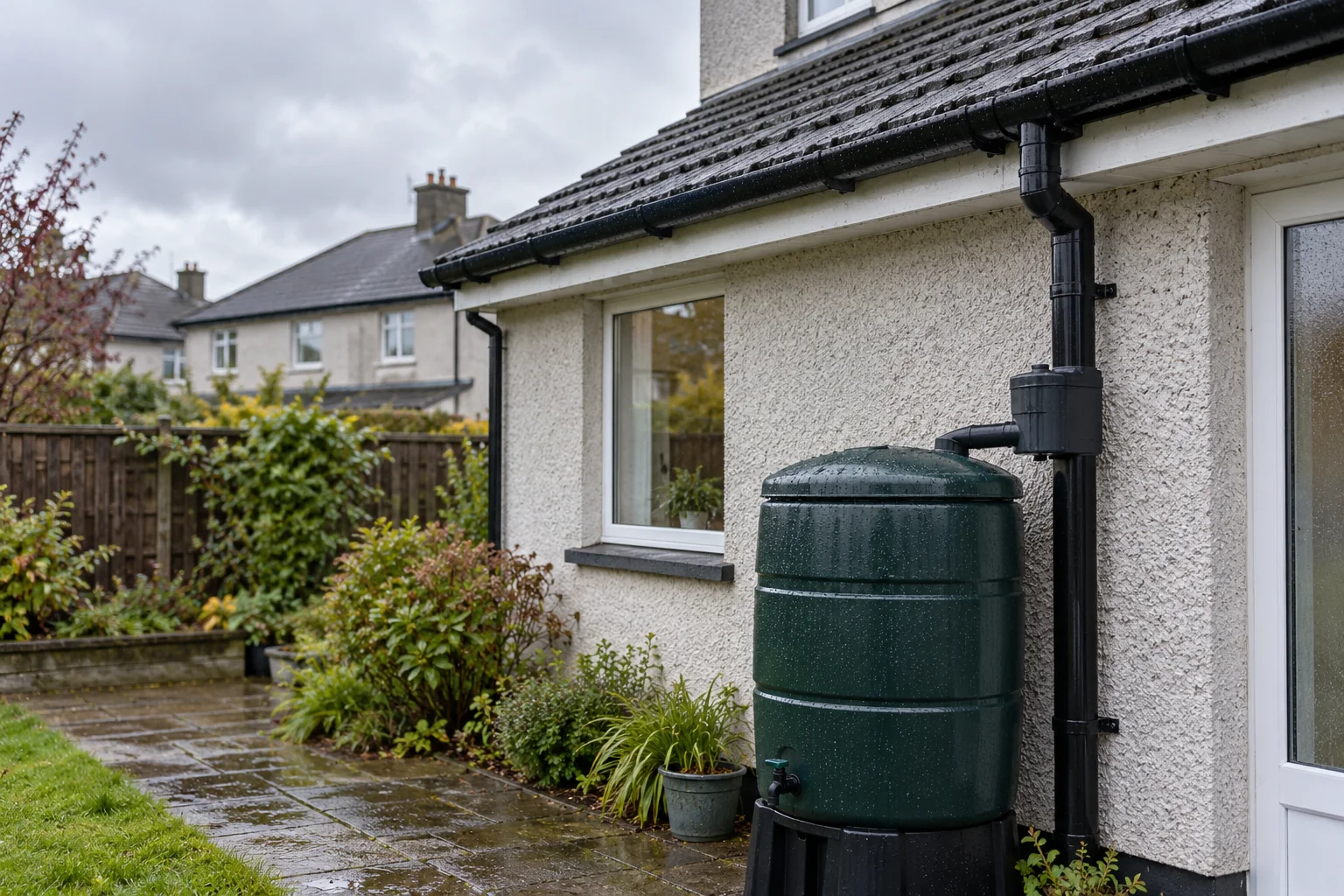
If any country was built for rainwater harvesting, it is this one. Between the rain that falls on your roof and the garden that wants watering from April to September, a water butt on the downpipe is one of the simplest, cheapest upgrades an Irish home can get. This guide covers what collected rainwater is good for, how to set up a system properly, how to care for it through an Irish winter, and the honest answer on whether it saves you money.
What collected rainwater is good for
Rainwater is soft, untreated and free of the chlorine in mains water, and many plants genuinely prefer it. Uses:
- Watering the garden, pots and greenhouse - the main event, and the reason most people start
- Washing the car - soft rainwater leaves fewer limescale spots than hard mains water
- Filling water features and ponds (top-ups only)
- Cleaning tools, boots and patios
What it is NOT for: drinking, cooking, brushing teeth, or washing food. Rainwater from a roof picks up whatever was on the roof - bird droppings, moss, dust and residues - and a water butt is not a purification system. Some people plumb harvested rainwater into toilets and washing machines with proper filtration and backflow protection; that is a bigger, professionally installed system, not a DIY project, and it is beyond what this guide recommends.
Setting up: the water butt and the diverter
The standard Irish setup has three parts:
- The butt. Anything from 100 to 350 litres for a typical garden. Bigger is not always better: a small butt that empties regularly stays fresher than a huge one that sits stagnant.
- The diverter kit. This is the clever bit. A section of your downpipe is cut and the diverter inserted; it channels water into the butt when the butt is empty, and automatically returns flow to the drain when the butt is full. No overflow down your wall, no flooding beside the house. Choose a diverter matched to your downpipe shape (round or square) and diameter.
- A secure base and lid. A full 200-litre butt weighs over 200kg, so it needs a flat, solid base. The lid matters more than people think: it keeps out leaves, insects, and small animals, and it is a child-safety essential. An open water butt is a genuine drowning hazard for small children - always keep it closed and, ideally, lockable.
Fitting a standard clip-in diverter is a ground-level job many homeowners do themselves. Anything that involves altering soil pipes, underground drainage, or connecting to household plumbing is professional work.
Placement and downpipe choice
Put the butt on the downpipe that collects the most roof area, ideally close to the garden. North-facing spots keep water cooler and slow algae growth. If you have a garage or shed, its downpipe is often ideal: smaller roof, cleaner water, closer to the vegetable beds.
Keeping the water clean
- Lid on, always. This is 90% of maintenance.
- Empty and rinse once a year, usually in spring: sludge and algae build up at the bottom.
- Check the diverter and gutter after autumn leaf fall - a blocked gutter upstream means a dry butt and an overflowing wall. Our ground-level gutter guide covers the seasonal check.
- If the water smells or the plants look unhappy, empty it and start again. Stagnant water is worse than no water.
Irish winter care
A full water butt can freeze and crack in a hard frost, and a cracked butt in January is a sad sight. Before the first proper frost warning from Met Éireann: drain the butt down to a low level or empty it entirely, and leave the tap open. Disconnecting the diverter for winter is optional; most people leave it in place and let rain pass through to the drain.
The honest money question
Will it save you money? For most Irish households, not directly at present. The CRU-approved 2026/27 Water Charges Plan says domestic customers are not currently liable for ordinary domestic water-supply and wastewater charges. Legislation provides for possible excess-use charging, but those charges do not take effect unless the required legal framework is in place. Check the current position before making a financial decision; a garden water butt is mainly about convenience, resilience and conserving treated water.
- Free, plant-friendly water during dry spells and hosepipe-conscious summers
- Resilience: when there is a hosepipe restriction or supply interruption, your garden survives
- Less runoff: every litre in the butt is a litre not hitting your drains in a downpour, which helps in heavy rain areas
- Environmental value: treated drinking water is not being poured on the lawn
A butt and diverter kit costs modestly and lasts for years; buy it for the convenience and the garden, not as an investment.
Going bigger: tanks and pumped systems
If you catch the bug, the next step up is a larger underground or slimline tank with a pump for hose pressure, and beyond that, professionally designed whole-house systems. Those are bigger conversations involving drainage, filtration and plumbing regulations - start with a butt, see how much you actually use, and scale from there.
Related questions
Is rainwater safe for vegetables?
Watering soil around vegetables is fine; avoid pouring harvested rainwater directly onto salad leaves or other food eaten raw near harvest time. The roof is not a clean surface, and the butt is not sterile.
Do I need planning permission for a water butt?
A small above-ground water butt will not normally need planning permission. Larger permanent tanks, excavation, protected structures or plumbing alterations can raise different requirements, so check with your local authority before a bigger installation.
How quickly does a butt fill in Ireland?
Faster than you would think. Even a small roof section collects significant water in a typical Irish shower, so expect a standard butt to fill regularly through autumn and winter, and to be used down in summer.
Sources checked
- CRU-approved Water Charges Plan for 2026/27, effective 1 October 2026; domestic and excess-use position checked 22 October 2026.
- Met Éireann frost-warning practice (general, no statistics cited)
- No savings or consumption figures are asserted anywhere in this piece, per the consolidation decision for legacy FAQs 19/20