
What a Roofing Quote Should Include, Line by Line
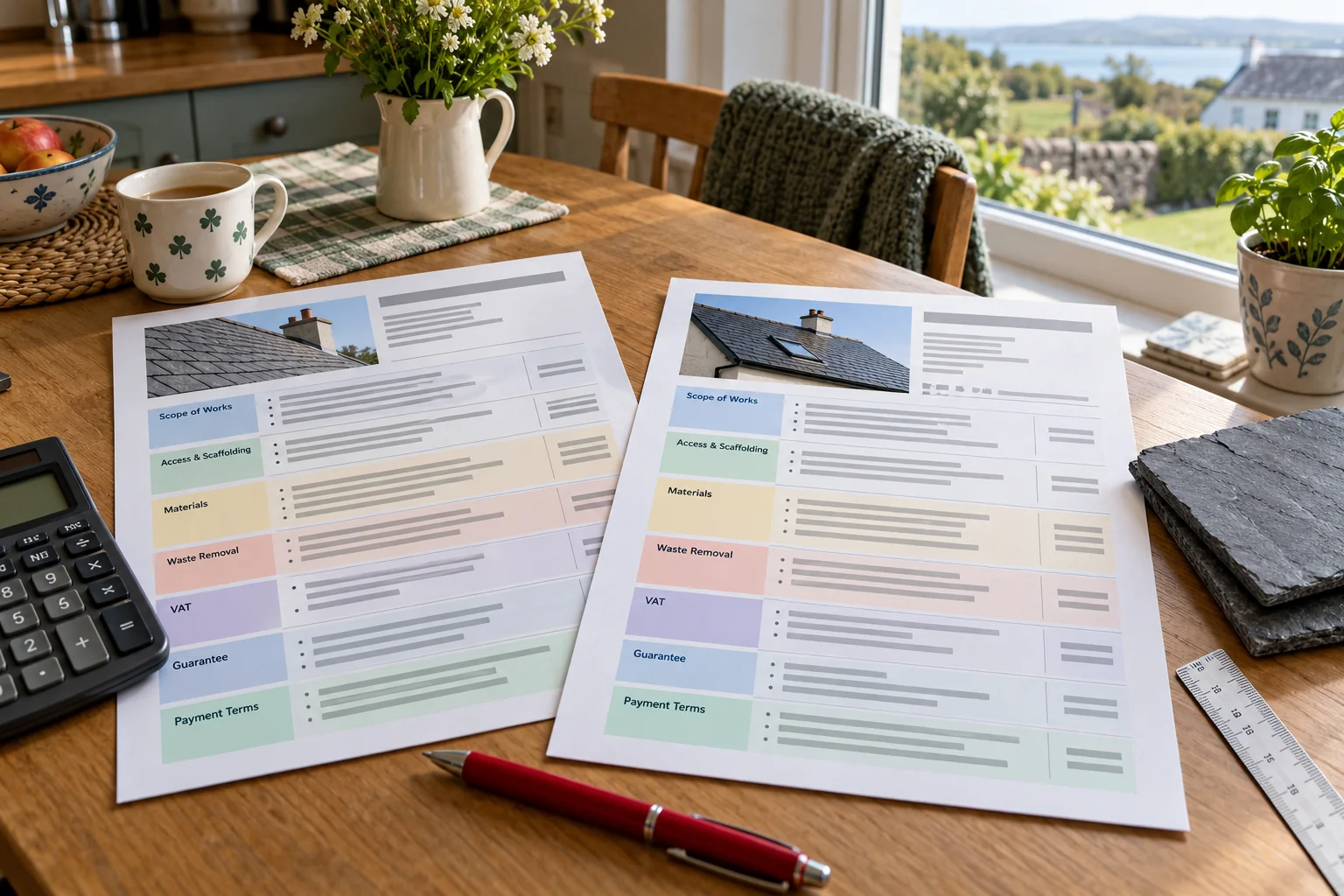
Two quotes for the same roof can differ by hundreds or thousands of euro and both look plausible, because the price is the last line of the story. The rest of the quotation is the story: what exactly is being done, with what materials, and what is deliberately not included. Once you can read those lines, the prices start making sense - and the suspiciously cheap quote usually explains itself.
FixMyRoof operates a quote-request service, so we have an interest here; that is exactly why we are publishing the checklist we would want you to apply to every quote, including ones that come through us.
The lines every roofing quotation should state
1. The scope, in plain words. "Repair roof" is not a scope. "Replace slipped slates on the rear slope, re-bed two ridge tiles, re-point flashing groove on chimney" is a scope. If you cannot tell from the quote what will be different about your roof when they leave, ask for it in writing.
2. Access equipment. Scaffold, tower or neither - stated explicitly. Access is a large share of many roofing costs, and a quote that assumes ladders-only where scaffold is genuinely needed is either underpriced or unsafe. Neither is good.
3. Materials, named. The type of slate, tile, felt system, membrane or flashing material - and whether they are new, reclaimed or "to match existing". On flat roofs the covering system should be named (felt, EPDM or GRP), because the systems differ in cost and lifespan.
4. Waste disposal. Removing old felt, slates and debris: included or not? A skip is a real cost. "Waste removed" in the quote saves a dispute later.
5. VAT, stated. Whether the price includes VAT and at what rate. Quotes "plus VAT" versus "including VAT" have sunk more comparisons than any other line.
6. The guarantee, in writing. What is guaranteed (workmanship, materials, or both), for how long, and what voids it. Verbal assurances are not a guarantee. Our selection guide explains why this line matters most when something goes wrong two winters later.
7. Payment terms. Deposit (if any), stage payments, and when the balance falls due. Be cautious of large upfront payments for domestic roofing work; staged payment tied to visible progress is the fair pattern.
8. What is excluded. Rot discovered in the deck after stripping, chimney repairs found mid-job, gutter replacement - the honest quote lists likely unknowns and states how they would be priced (day rate, per-unit, or re-quote). This line is the mark of a contractor who has done the job before.
9. Timescale. Expected start window and duration, with the weather caveat stated. In Ireland, roofing schedules slip; a quote that names the slippage policy is more trustworthy than one promising the sun.
10. Who is doing the work. Employees or subcontractors, and whose insurance covers them.
The comparison method
When your quotes arrive:
- Build a simple list of the ten lines above and tick which quote states which line.
- Where a line is missing, ask for it in writing - the answer is often more informative than the number.
- Only then compare totals. Compare complete quotations on the same scope before deciding which total offers better value.
If any contractor resists putting scope, VAT or guarantee in writing, that resistance is itself a quotation line: it tells you what dealing with a problem later will feel like.
Ready to collect comparable quotes? Request quotes from roofers in your county
Related questions
Should I pay a deposit for roofing work?
A modest deposit to cover materials is common practice; a large cash payment before work starts is not. Staged payments tied to progress protect both sides.
Is a text message with a price a quotation?
It is a starting point, nothing more. If the job matters, ask for the written version with the lines above. A contractor who cannot produce one is telling you something.
Why do quotes for the same job vary so much?
Usually scope: one is quoting a repair, the other a replacement; one includes scaffold and waste, the other quietly does not. Compare the lines before the totals and the mystery mostly disappears.
Source checked
CCPC guidance on home-improvement and building-work disputes, checked 22 October 2026. It recommends written details including price, estimated completion, payment structure and a detailed description of the work, and cautions against large upfront payments.