
What Is a Roof Valley and Why Does It Leak?
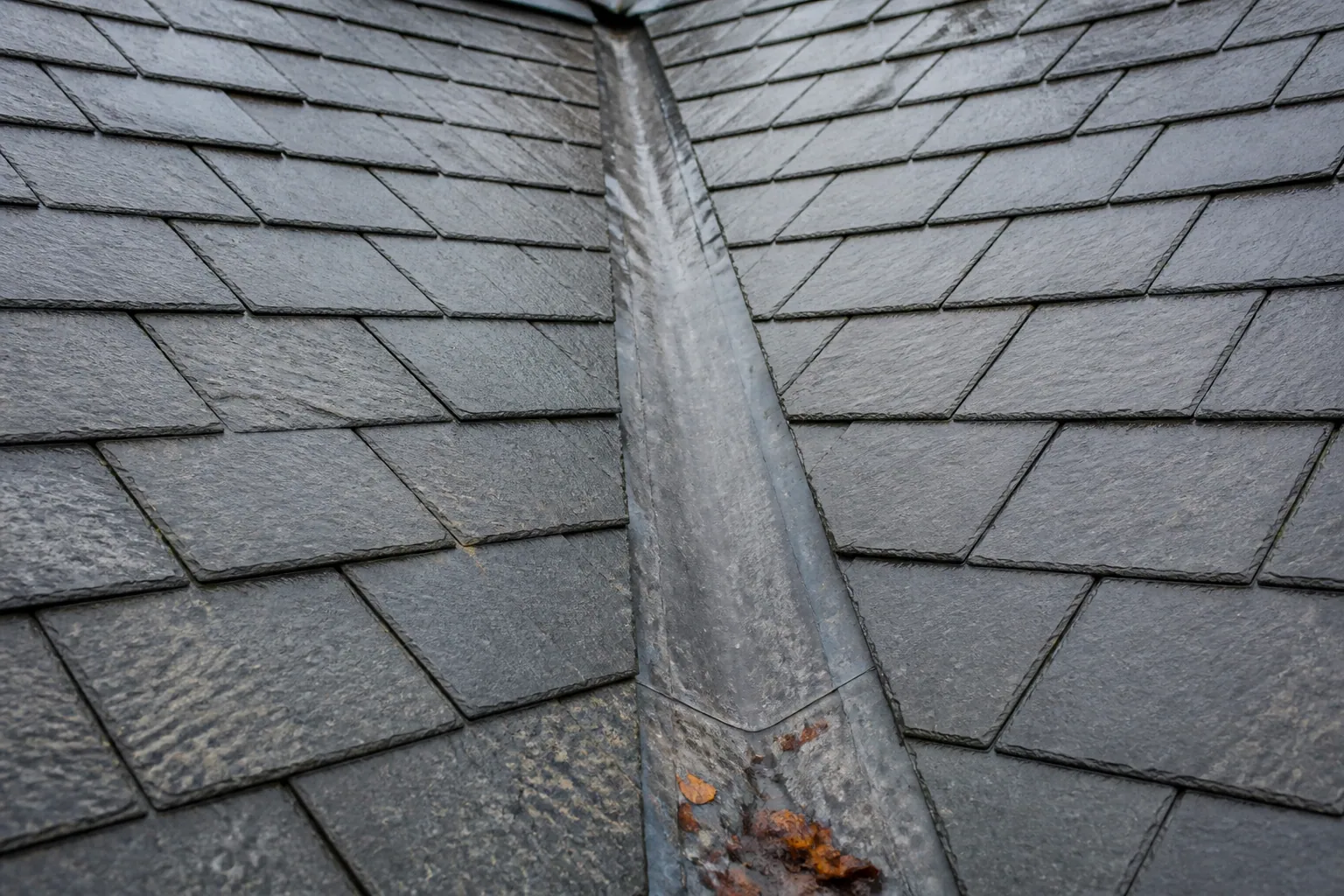
A valley is the channel formed where two roof slopes meet, and it concentrates rainwater from those slopes. It leaks when its lining cracks, corrodes, lifts or blocks with debris. Because valleys do so much work, a small fault there lets in a lot of water, which is why valley leaks punch above their size.
What a valley does
Rainwater from the adjoining slopes drains towards the valley. In heavy Irish rain the flow is closer to a stream than a trickle. The lining underneath, traditionally lead, now often a GRP or pre-formed system, is the waterproof layer doing the real work, with the tiles or slates above it shedding water into the channel.
The four common failure causes
- Cracked or fatigued lead. Lead expands and contracts for decades; eventually it splits, especially on older roofs and sun-catching south-facing valleys.
- Debris dams. Moss, leaves and grit wash down the slopes and lodge in the valley. Water backs up behind the dam, rises above the lining's edge laps, and enters the roof. This is the classic Irish failure on mossy roofs, and it links straight back to regular cleaning.
- Poor original installation. Valleys cut too tight, laps too short, or the wrong material for the pitch. These leak from year one, usually in driving rain only.
- Corrosion or physical damage, including foot traffic from previous work on the roof.
Why the damp patch appears far from the fault
Water entering at a valley runs along timbers, felt and the underside of the roof before it drips. The ceiling stain may be metres from the actual entry point, which is why "the leak is above the stain" is often wrong. A good roofer traces from the valley outward, not from the stain upward.
Repair or reline?
- Localised crack or loose section: targeted repair or partial renewal is often enough.
- Widespread fatigue, repeated leaks, or original poor detailing: a roofer may recommend renewing the lining after assessing the cause.
- Internal editorial estimate for a valley reline: €400 to €900 per valley, depending on access and material. This is an unverified briefing range, not a quotation; technical review is pending.
Valley work means stripping surrounding tiles and working at height, so it is professional work throughout. From the ground, you can spot the warning signs (debris in the valley line, staining on walls below, slipped tiles near the channel) using the routine in our ground-level inspection guide, and after storms the storm damage checklist applies.
Draft evidence note: Numerical ranges above were supplied as FuturePublishing internal editorial estimates. They have not been independently verified; named technical review is still required.