
Why Chimneys Leak: Flashing, Pointing and Cowls
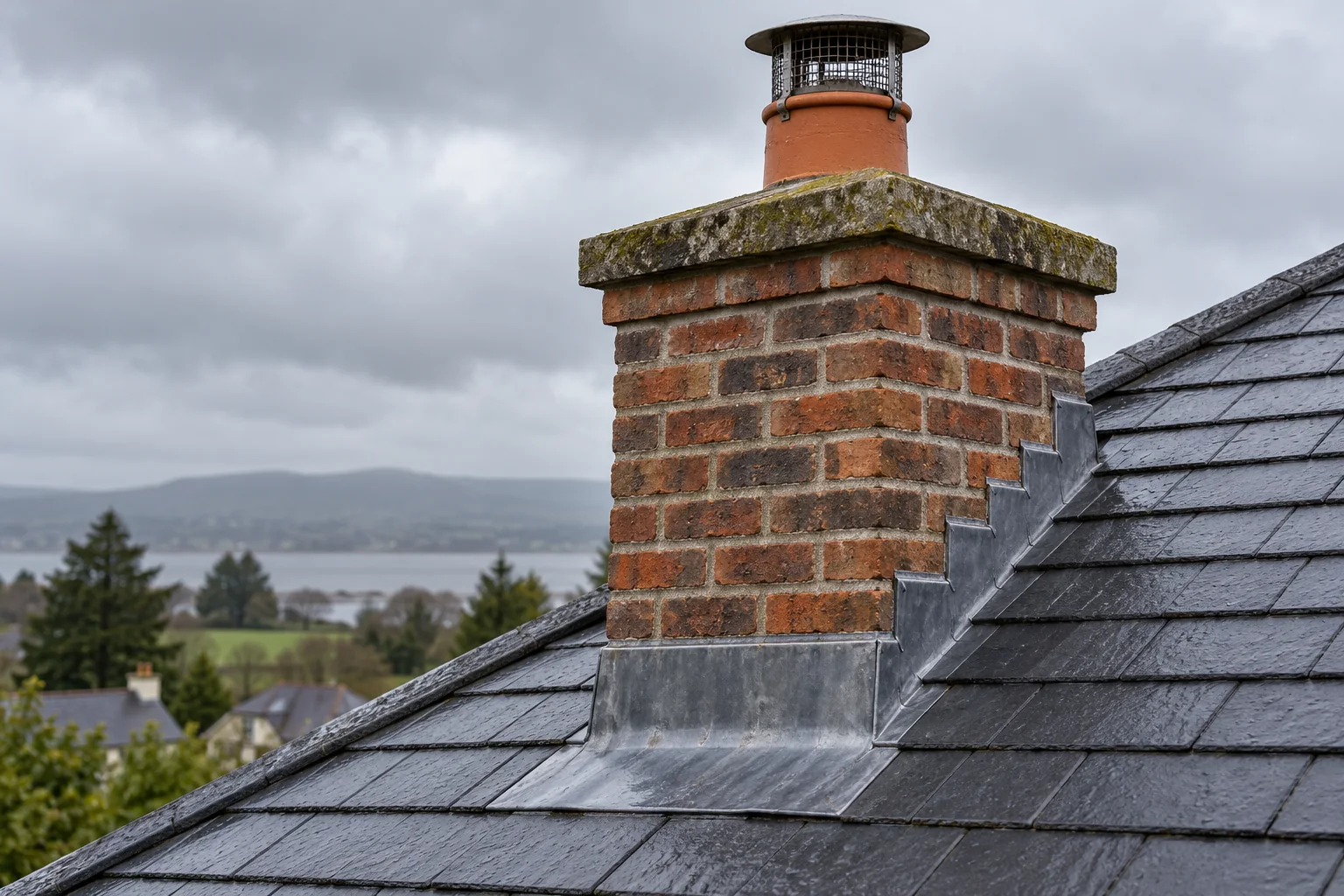
The chimney is the most interruption-prone part of an Irish roof. It sticks up into the weather on all four sides, it is usually the oldest masonry on the house, and the joint where brickwork meets roof covering has to flex with two materials that expand at different rates. When a damp patch appears on the chimney breast or the upstairs ceiling near it, the chimney is the first suspect - and it earns that suspicion.
Here is how chimney leaks actually happen, in rough order of how often roofers find them.
1. Failed flashing
Flashing is the metal skirt, usually lead, that seals the joint between the chimney and the roof. It is dressed into a groove cut into the mortar and down over the slates or tiles. It fails in a few ways:
- Lifted or torn flashing after storms, letting wind-driven rain straight in
- Perished sealant or mortar in the groove that holds the flashing, so water tracks behind it
- Cracked lead from decades of thermal movement, especially on south-facing stacks
Flashing repairs range from re-dressing and re-pointing the groove to full replacement with new lead. This is a common chimney repair, although the scope depends on the condition of the lead, mortar and surrounding roof.
2. Perished pointing and masonry
The mortar between chimney bricks has a harder life than any other mortar in the house: fully exposed, high up, saturated for months of the Irish winter. Once it crumbles, water soaks the stack itself and can emerge inside days after the rain, which confuses diagnosis. Repointing the stack is routine work, though it needs proper access equipment.
Look from the ground for mortar dust on the roof below the chimney, gaps between bricks, or a stack that appears to lean.
3. The flue top: pots, caps and cowls
An open flue is a vertical hole into your house. Rain falls straight down it; on disused flues it soaks into the breast. A chimney cowl or cap keeps rain out while letting the flue breathe. If you have a fireplace that is no longer used, ask about a capped cowl: ventilated but rain-proof. A missing or broken pot, or a bare open flue, is cheap to fix and expensive to ignore.
4. Chimneys on flat and low-slope sections
Where a chimney passes through a flat roof or dormer, the same flashing principles apply but water lingers longer, so small defects leak sooner.
Working out which one you have, from inside
You cannot diagnose a chimney properly from your armchair, but the symptoms narrow it down:
- Damp that appears quickly during or right after rain: suspect flashing or an open flue - direct water entry
- Damp that appears a day or two after rain and lingers: suspect saturated masonry - the stack itself is holding water
- Brown staining with a slight smell, worst in winter fires: could be tar deposits from the flue condensing - a sweep or liner question, not a roofer one
- Damp high on the breast near the ceiling: stack or flashing; damp lower down: could be a disused-flue condensation issue
Take dated photos of the patch as it develops; they help the roofer and, if it comes to it, your insurer (see our insurance guide).
The repair conversation
When you get quotes, expect them to name the specific cause, not just "fix the leak". A good quote distinguishes flashing work, repointing, cowl fitting and any scaffold or access equipment, because access is often half the cost of chimney work. Our guide to choosing a roofer covers the evidence to ask for, and you can Request quotes from roofers in your county.
Related questions
Can flashing be repaired without replacing it?
Often, yes: re-dressing lifted lead and re-pointing the groove is a standard repair. Cracked or fatigued lead is a different matter - patching old lead rarely lasts, and replacement is the honest fix.
My fireplace is blocked up. Can the chimney still leak?
Yes. A disused chimney is still masonry in the weather, and a sealed bottom with an open top turns the flue into a rain collector. Capping with ventilation is the standard answer.
Is chimney work covered by home insurance?
Sudden storm damage usually is; gradual wear and failed pointing usually is not. The boundary matters, and it is explained in our insurance FAQ.
Sources checked
General roofing practice only. Flashing, masonry and flue-top wording remains held for named technical review.