
Solar Panels? Check Your Roof Condition First
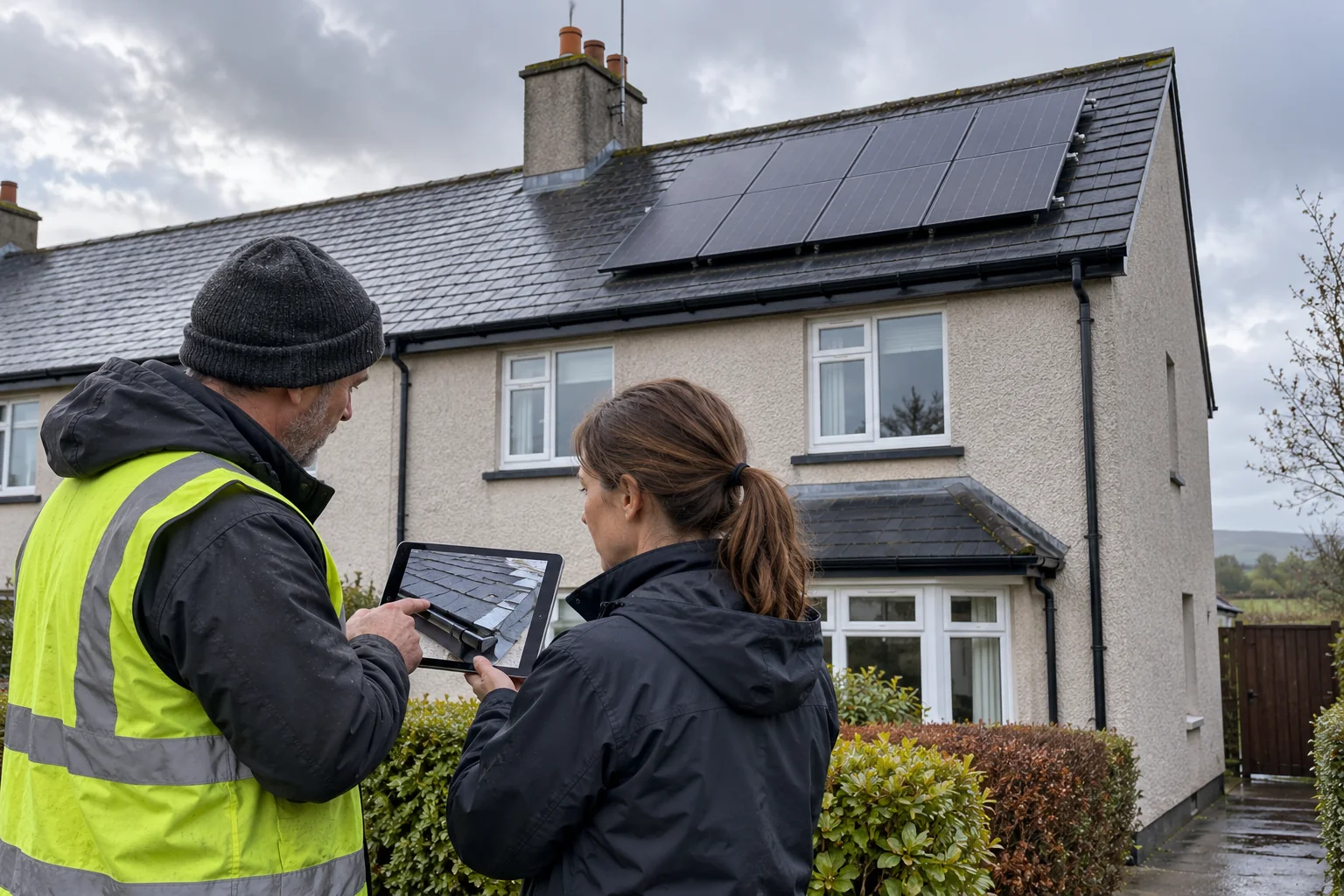
Solar installers will happily talk to you for hours about panels, inverters and batteries. Fewer of them volunteer the question that matters first: what are we fixing all this equipment to? A solar array is intended to remain on your roof for many years. If the roof underneath it has ten years left, you have not bought a solar system - you have bought a future bill for taking everything off and putting it back on.
The order of works that saves money
The expensive sequence looks like this: panels fitted on an ageing roof, roof fails a few years later, panels removed and stored, roof replaced, panels refitted. You pay for the roof work once and the solar labour twice.
The sensible sequence: get the roof honestly assessed first, do whatever it needs, then fit panels on a surface that will outlast them.
What "roof ready for solar" means
Condition. Slates or tiles near the end of their life, widespread previous repairs, or any active leak history should be settled before panels. Mounting rails are fixed through the roof covering into the structure; a sound covering is not optional.
Structure. Panels, rails and ballast add weight, and wind loads on an array are real. Most Irish roofs in good order carry a standard domestic array comfortably, but "most" is not "all" - older roofs with undersized timbers, or roofs with a sagging history, deserve a structural opinion. A reputable installer arranges this; if nobody mentions it, mention it yourself.
Remaining life alignment. The simplest rule of thumb: if your roof covering is likely to need replacement within the system's expected life, do the roof first. Our flat vs pitched guide covers covering lifespans in general terms, and the cost FAQ frames the replacement decision.
Access and penetrations. Every mounting point is a penetration of the roof covering. Done with the correct flashing kit for your slate or tile type, they are reliable for decades; done casually, they are twenty new leak points. Ask which mounting and flashing system the quote includes.
The grants position
SEAI currently supports domestic solar PV with a grant of EUR 700 per kWp up to 2kWp, plus EUR 200 for each additional kWp up to 4kWp, capped at EUR 1,800 (checked against seai.ie 2026-10-22 - grant terms change, so verify the current position before you budget). Note what the grant does not cover: the roof itself. Roof preparation is your cost, which is another reason to sequence it deliberately rather than discover it mid-project.
Questions to put to the solar quote
- Who assesses the roof's condition and structure, and is that in writing?
- Which mounting and flashing system is included, and is it matched to my roof covering?
- What is the plan and the cost if the roof needs work first?
- If the roof ever needs replacement later, what does removal and refitting cost?
An installer with good answers to all four is an installer who has been asked before.
If the roof question comes back "needs work first", that is a roofer conversation: Request quotes from roofers in your county.
Related questions
My roof is only ten years old. Do I still need the check?
A light-touch one. A decade-old roof in good order is usually fine, but the mounting and flashing questions still apply to every quote.
Can panels go on a flat roof?
Yes, on angled frames with ballast or fixings, but the covering condition matters even more because flat roofs hold water. Our flat roof coverings guide covers those surfaces.
Do I need planning permission for solar panels in Ireland?
Domestic solar has broad exemptions, with conditions and limits. Check the current position with your local authority or the SEAI guidance before committing, as the rules have been updated in recent years.
Sources checked
- SEAI domestic solar PV grant, checked 22 October 2026.
- Government solar planning exemptions, checked 22 October 2026.
Structural and roof-mounting wording remains held for named technical review.