
Leak or Condensation? Attic Damp in Irish Homes
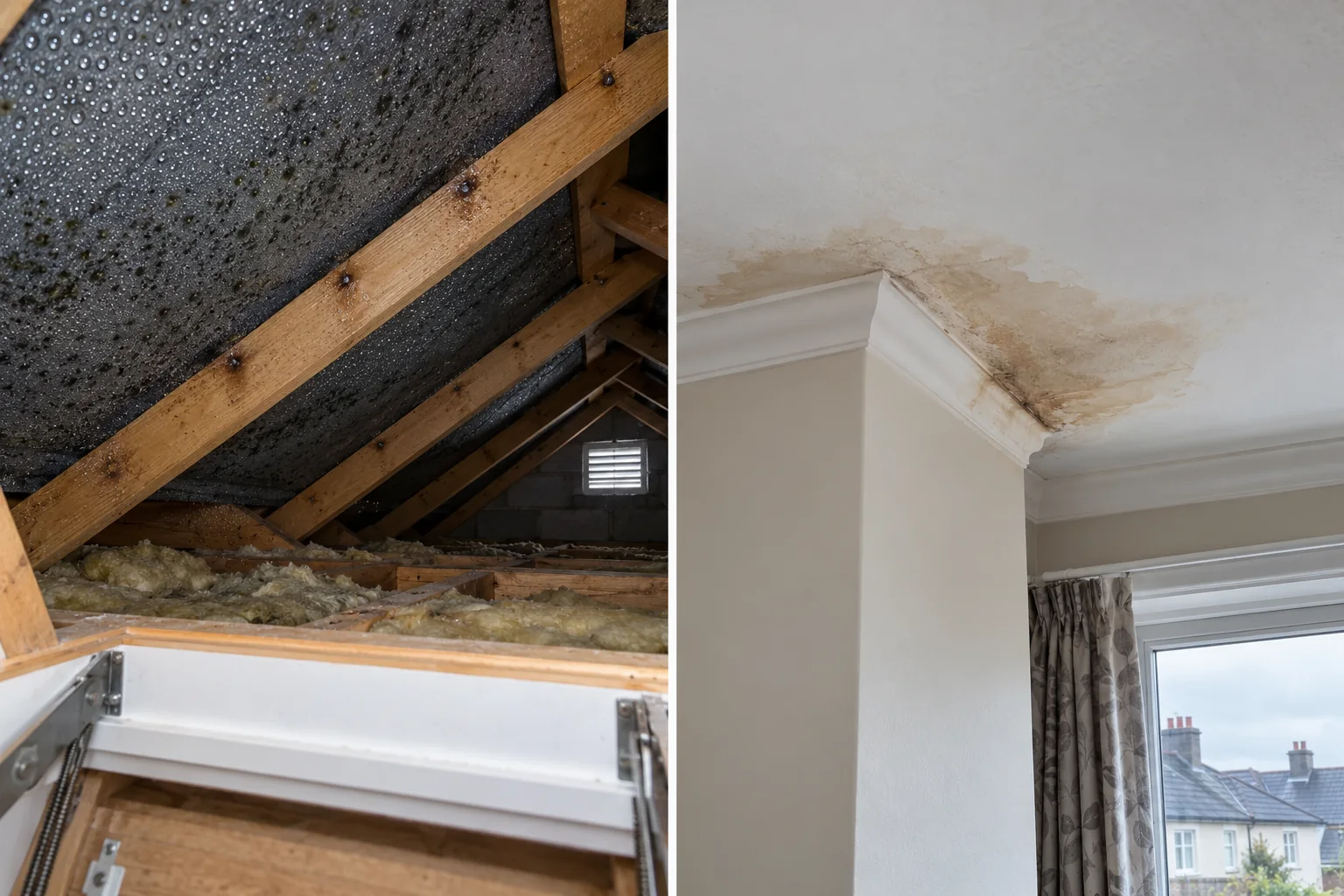
Every winter, Irish householders find a damp patch on a bedroom ceiling or black specks of mould in the attic and brace themselves for a roof repair bill. Here is the thing that might save you that bill: in a heated Irish home in January, the moisture is very often not coming through the roof at all. It is coming from your own house.
Warm air holds moisture from cooking, showers, drying clothes and breathing. That air rises. When it meets a cold surface - the underside of a chilly roof, a cold ceiling corner - the moisture drops out as water. That is condensation, and it is the single most misdiagnosed "roof leak" in the country.
Telling them apart
It behaves like a LEAK when:
- The damp appears during or shortly after rain, and dries out in dry spells
- The patch is localised: one defined area, often with a brown tidemark
- It sits below a roof feature: chimney breast, valley line, roof window, or where an extension meets the main roof
- You can see a daytime sky-check correlate: missing slates, lifted flashing (from the ground - our ground-level check shows how)
It behaves like CONDENSATION when:
- It is worst in cold weather regardless of rain, and improves when the house is aired
- Mould specks appear spread across cold surfaces, in corners, behind furniture, on the attic felt over a wide area
- Nails in the attic are wet or rusty and the felt underside is damp across its whole width, not in one place
- The household dries clothes indoors, vents a tumble dryer into the room, or the attic hatch area shows the problem worst
Plenty of Irish homes have both at once, so if the picture is mixed, a roofer's inspection settles it.
Why the answer matters
If it is condensation, a roofer cannot fix it, because the roof is not broken. The fix is moisture control and ventilation, and the order matters:
- Reduce the moisture: vent the dryer, lid the pots, use the extractor, do not dry clothes on radiators in sealed rooms.
- Ventilate the attic: Irish roofs are designed to breathe at the eaves. If insulation has been pushed tight into the eaves and blocked that path, the attic turns into a cold sponge. As our fascia and soffit guide explains, the soffit's ventilation job is exactly this. And if you are adding insulation under the SEAI grants in our grants FAQ, the ventilation path must be kept open - insulation must not block it.
- Then reassess: if damp persists with rain-driven timing after moisture and ventilation are addressed, now it is a roofer question.
If it is a leak, condensation fixes will not touch it, and delay costs timber. The tell is the rain link.
A word on dehumidifiers
A decent dehumidifier earns its keep in an Irish winter while you get ventilation sorted, particularly in bedrooms and drying rooms. It treats the symptom, not the cause, but as symptoms go, wet houses are worth treating.
When it genuinely is the roof
Rain-timed patches, localised staining below roof features, or daylight visible in the attic mean the diagnosis is done. Photograph the patch with dates, then Request quotes from roofers in your county. Our insurance guide covers the claim side if storm damage is involved.
Related questions
Will more attic insulation make condensation worse?
Badly fitted insulation can, if it blocks eaves ventilation. Properly fitted insulation with a clear ventilation path usually helps, because the ceiling below stays warmer. The two jobs are really one job.
The mould is only behind wardrobes and in corners. Roof?
Almost certainly not. That pattern is cold-surface condensation in rooms. Ventilation and moisture control, not a roofer.
Can I check the attic myself?
Only if it is boarded, lit and safe to move around in. If it is not, do not balance on joists - one missed step puts a foot through the ceiling. A torch shone from the hatch tells you a surprising amount.
Sources checked
SEAI attic-insulation and ventilation context, checked 22 October 2026. Diagnostic and ventilation wording remains held for named technical review.